Side-by-side or overlay PDF diff driven by one engine that reads each file into a structured model — text, vector geometry, images, form fields, annotations — and compares the models. Moves show as moves, edits show only where they happened, and any PDF type works without picking a mode.
Open a STEP / STP part and it measures itself — volume, thinnest wall, draft and undercut checks on load, plus hole detection with a BOM. Measure, section, export STL. Rust + WASM B-rep kernel, runs in your browser.
Roots and tubers from Southern and south-western Ethiopia
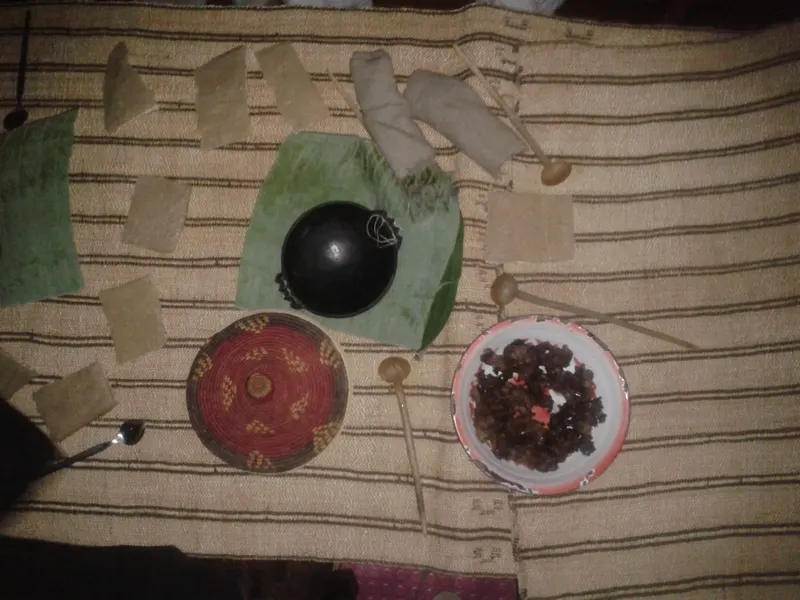
Kocho (fermented enset) and bullaቆጮ
The inner leaf sheaths and corm of the enset plant are scraped to a pulp, mixed with an old ferment as starter and packed into a leaf-lined pit or basket. Over weeks to months lactic bacteria sour it into kocho, a dense, sour staple for millions in southern Ethiopia.
Fully documentedRoots and tubers2 days – 12 months
No fixed amounts recordedHousehold process with no fixed amounts in the sources used. In the Gamo trial enset plants were fragmented and fermented for two months. In the Dawro trial the grated corm and scraped leaf-sheath mass of each of three enset varieties was mixed in its own newly prepared pit.
Scraped inner leaf sheaths of the enset pseudostem
Previously fermented enset, or fine-cut pseudostem with herbs, tree leaves and rotted leaf sheaths left 15–30 days[tadesse2024]
Starter
backslop: gamma or gamancho, an earlier ferment of enset with herbs and leaves
Total time across the recorded steps: 2 days – 12 months
Start
Drag the bar or press Play
What changes:Enset leaf sheaths are scraped to pulp and the corm is grated
Step 1 of 5
Scrape the leaf sheaths and grate the corm
Time
Not documented
Temperature
Not documented
Salt
None given
Acidity
Not documented
Which microbes the steps name, step by step
Lactic acid bacteria
Scraping the pseudostem and fermenting it in a pit or a bamboo basket were the two steps every Gamo highland maker shared. Output: enset pulp and fibre.
Flavour
Not documented
Texture
Not documented
Colour
Not documented
Microbes at work in this step
Not documented for this step.
Method
Measured measured in a studySet fixed by a specification or tested recipeReported one source reports itTypical a general value, not sourced for this fermentUnconfirmed not yet checked against a source
At a glance
The inner leaf sheaths and corm of the enset plant are scraped to a pulp, mixed with an old ferment as starter and packed into a leaf-lined pit or basket. Over weeks to months lactic bacteria sour it into kocho, a dense, sour staple for millions in southern Ethiopia. Made in 5 steps over 2 days – 12 months. The longest step, pack into a leaf-lined pit or basket and cover, takes 2 days – 12 months (Andeta A.F 2018). Leuconostoc mesenteroides starts the fermentation; Leuconostoc and Lactococcus lead early and Later: Prevotella paludivivens, Lactobacillus, Weissella and Bifidobacterium minimum do most of the fermenting.
BullaThe starch squeezed from the pulp and dried to a white powder; used for porridge, dumplings, soup and pancakes.
AmichoThe third main enset food, besides kocho and bulla.
Safety
Kocho soured to pH 4.3 held back Salmonella, Bacillus cereus and Staphylococcus aureus added to it. Acid does not remove spores. In a study of long-term kocho (7 months to a year), 3 of 10 bacterial isolates were identified as Bacillus anthracis, the anthrax bacterium, and 1 as B. thuringiensis, both in the B. cereus group. The authors call this a critical finding, because spores may survive low pH and may come from the soil pit, poor hygiene or manure. They ask for stricter sanitation and starter cultures. The names rest on 16S rDNA sequences, and the paper reports no test for the virulence plasmids that the authors say toxicity depends on. They also say human infection mainly comes from contact with infected animals. They know of no illness reported from kocho and suggest low bacterial numbers and inactivation in baking as possible reasons, but the paper tested neither. Do not eat it uncooked, though no source we read shows that cooking kills these spores.
Hazards the sources name: Bacillus anthracis (3 of 10 isolates) and B. thuringiensis (1 of 10), both in the Bacillus cereus group, in long-term kocho.
[nigatu1994] Nigatu A., Gashe B.A. 1994, Survival and growth of selected pathogens in fermented kocho (Ensete ventricosum), East African Medical Journal 71:514–518 (abstract)paper