Side-by-side or overlay PDF diff driven by one engine that reads each file into a structured model — text, vector geometry, images, form fields, annotations — and compares the models. Moves show as moves, edits show only where they happened, and any PDF type works without picking a mode.
Open a STEP / STP part and it measures itself — volume, thinnest wall, draft and undercut checks on load, plus hole detection with a BOM. Measure, section, export STL. Rust + WASM B-rep kernel, runs in your browser.
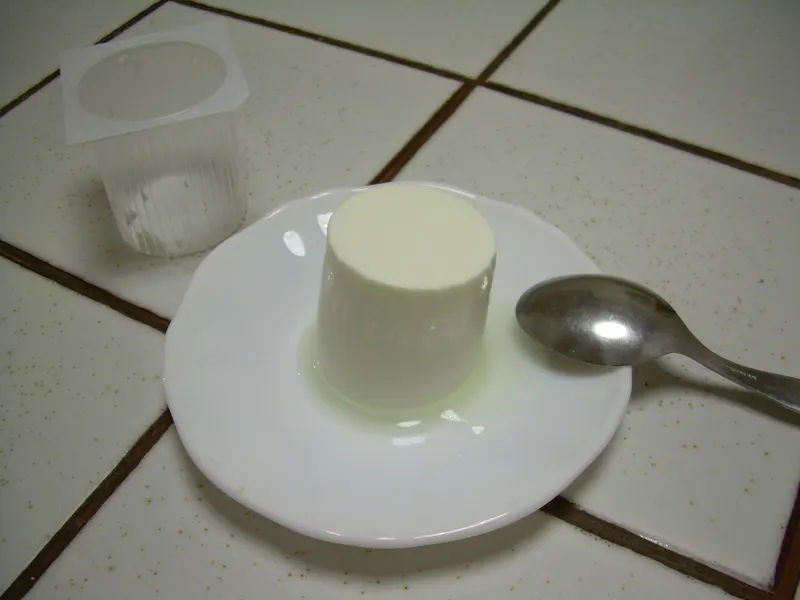
Petit-suisse is a fresh, unripened cheese of very high moisture, made by coagulating milk with specific lactic bacteria, rennet or other coagulating enzymes, with cream and other dairy solids optional. Brazil's technical regulation sets at least 6.0% milk protein and storage at no more than 10 °C. A Brazilian university recipe sets the milk at 35 °C for 24 hours, drains it and beats in cream; the French trade body says fresh cheeses are kept at 0–6 °C.
What changes:The milk is pasteurised for a few minutes to kill disease germs
Step 1 of 6
Pasteurise the milk
Time
Not documented
Temperature
Not documented
Salt
None given
Acidity
Not documented
Which microbes the steps name, step by step
Lactic acid bacteria
Lactobacillus casei
The French trade-body guide says fromage blanc milk is pasteurised "for a few minutes" and gives no temperature; the Brazilian lab recipe also starts from pasteurised milk.
Flavour
Not documented
Texture
Not documented
Colour
Not documented
Microbes at work in this step
Not documented for this step.
Method
Measured measured in a studySet fixed by a specification or tested recipeReported one source reports itTypical a general value, not sourced for this fermentUnconfirmed not yet checked against a source
At a glance
Petit-suisse is a fresh, unripened cheese of very high moisture, made by coagulating milk with specific lactic bacteria, rennet or other coagulating enzymes, with cream and other dairy solids optional. Brazil's technical regulation sets at least 6.0% milk protein and storage at no more than 10 °C. A Brazilian university recipe sets the milk at 35 °C for 24 hours, drains it and beats in cream; the French trade body says fresh cheeses are kept at 0–6 °C. Made in 6 steps over 24 h. The longest step, let the milk set, takes 24 h (Vargas P.O 2017). Specific lactic bacteria (not named in Brazil's regulation); the traditional make is described as mesophilic bacteria with rennet and Mesophilic lactic culture (1 % of the milk) in a Brazilian lab recipe, with a probiotic Lactobacillus casei added on top in that study do most of the fermenting.
A fresh lactic cheese that the French cheese decree names as defined in its annex, and whose dry matter may not drop to the lower level the decree allows for other fromages blancs. The English and French Wikipedia describe the industrial make as pasteurised cow milk (the French one adds rennet), enriched with cream and then smoothed and drained in a centrifuge, which gives a smooth, thick, unsalted cheese.
Protein
At least 6.0% milk protein (Brazilian regulation)
Storage
Kept and sold at no more than 10 °C (Brazilian regulation)
Dry matter
In France, other fromages blancs may be sold with as little as 15 or 10 g of dry matter per 100 g (depending on fat); the decree excepts demi-sel and petit-suisse from this
Texture
Pasty and soft; white, or coloured by what is added
Brazil's regulation requires it to be kept and sold at no more than 10 °C, and the English Wikipedia says the cheese is made from pasteurised milk.
Hazards the sources name: Coliforms and coagulase-positive staphylococci were checked in the Brazilian lab petit-suisse; total coliforms stayed below 3.0 MPN/g and staphylococci below 1.0x10^1 CFU/g.
The English Wikipedia says that in the 1850s a Swiss employee at a dairy in Normandy suggested adding cream to the curd, and that despite its name the cheese did not begin in Switzerland. French Wikipedia places the invention at a Picardy farm in Villers-sur-Auchy, says Étienne Pommel was already making cream-enriched fresh cheese at Gournay-en-Bray from 1828, and credits Charles Gervais with industrialising it from 1852 at Ferrières-en-Bray. The two accounts differ on where it began.