Side-by-side or overlay PDF diff driven by one engine that reads each file into a structured model — text, vector geometry, images, form fields, annotations — and compares the models. Moves show as moves, edits show only where they happened, and any PDF type works without picking a mode.
Open a STEP / STP part and it measures itself — volume, thinnest wall, draft and undercut checks on load, plus hole detection with a BOM. Measure, section, export STL. Rust + WASM B-rep kernel, runs in your browser.
Lemons are cut into quarters almost to the base, packed with plenty of salt and covered with lemon juice in a sealed jar. Over about two weeks the salt draws out juice and lactic acid bacteria from the lemon surface lower the pH, and the rind softens. Only the rinsed peel is used.
Fully documentedFruit14 days
Recipe
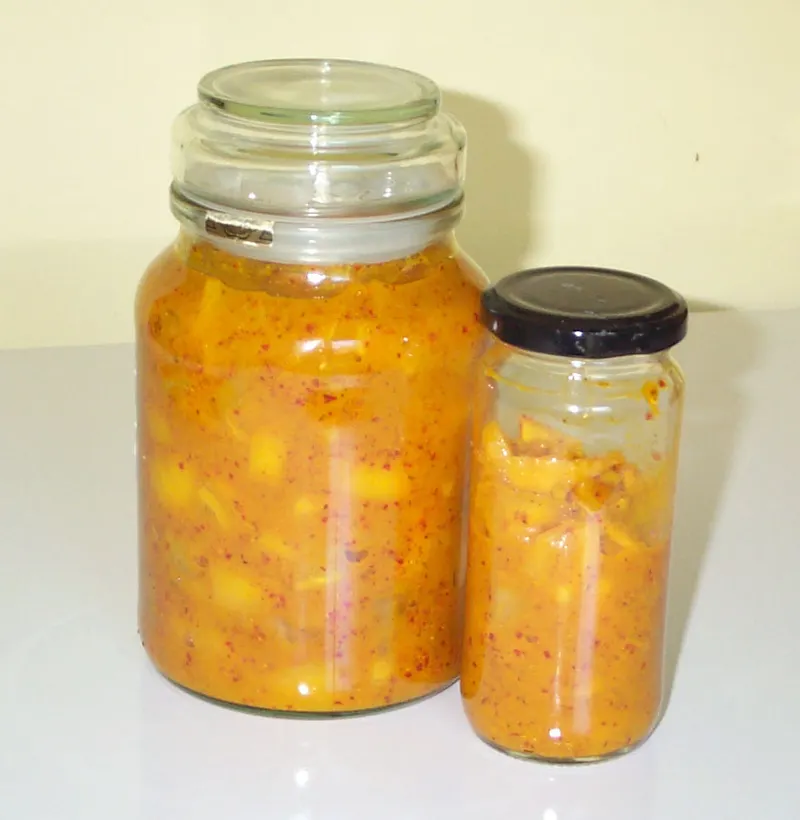
Photo: Webaware, Public domain, via Wikimedia Commons
Amounts from a sourceClemson Extension's recipe for about 1 quart, from the Ball Complete Book of Home Preserving; UC Cooperative Extension publishes the same recipe.
Lemons10
5 cut almost into quarters for the jar, 5 juiced[hgic][ucce]
spontaneous (lactic acid bacteria from the lemon surface)
Total time across the recorded steps: 14 days
Start
Drag the bar or press Play
What changes:Each lemon is cut into quarters, still joined at the base
Step 1 of 4
Cut the lemons almost into quarters
Time
Not documented
Temperature
Not documented
Salt
None given
Acidity
Not documented
Which microbes the steps name, step by step
Lactic acid bacteria
Slice 1/8 inch off the stem end and cut lengthwise into quarters, leaving the base intact.
Flavour
Not documented
Texture
Not documented
Colour
Not documented
Microbes at work in this step
Not documented for this step.
Method
Measured measured in a studySet fixed by a specification or tested recipeReported one source reports itTypical a general value, not sourced for this fermentUnconfirmed not yet checked against a source
At a glance
Lemons are cut into quarters almost to the base, packed with plenty of salt and covered with lemon juice in a sealed jar. Over about two weeks the salt draws out juice and lactic acid bacteria from the lemon surface lower the pH, and the rind softens. Only the rinsed peel is used. Made in 4 steps over 14 days. The longest step, ferment in a cool dark place, takes 14 days (Hardiman J.L. 2026). Lactic acid bacteria from the lemon skin does most of the fermenting.
Preserved lemons are packed in salt and their own juice, with no added water. FAO describes lamoun makbous, known in west Asia and north Africa, where sliced lemons are salted for at least 24 hours, drained and mixed with oil and spices.
Lamoun makbousSliced lemons covered in salt for at least 24 hours, then drained and mixed with oil and spices [fao134].
Refrigerator methodLemons packed with kosher salt, left 2–3 days at room temperature, then refrigerated; ready in three weeks [ucce].
Safety
Use non-iodised pickling salt and a jar sterilised by boiling. Add only dried spices, since fresh herbs can change the pH, and refrigerate once the lemons are ready [hgic].
Clemson Extension says preserved lemons are a staple of Middle Eastern and North African pantries and were originally a way to keep lemons for use long after the fruit's season had ended [hgic].
Temperature, salt and pH
The sources we found give no temperature, salt or pH figure for any of its steps.