Side-by-side or overlay PDF diff driven by one engine that reads each file into a structured model — text, vector geometry, images, form fields, annotations — and compares the models. Moves show as moves, edits show only where they happened, and any PDF type works without picking a mode.
Open a STEP / STP part and it measures itself — volume, thinnest wall, draft and undercut checks on load, plus hole detection with a BOM. Measure, section, export STL. Rust + WASM B-rep kernel, runs in your browser.
Vegetables from Chenguantun, Jinghai District, Tianjin, China
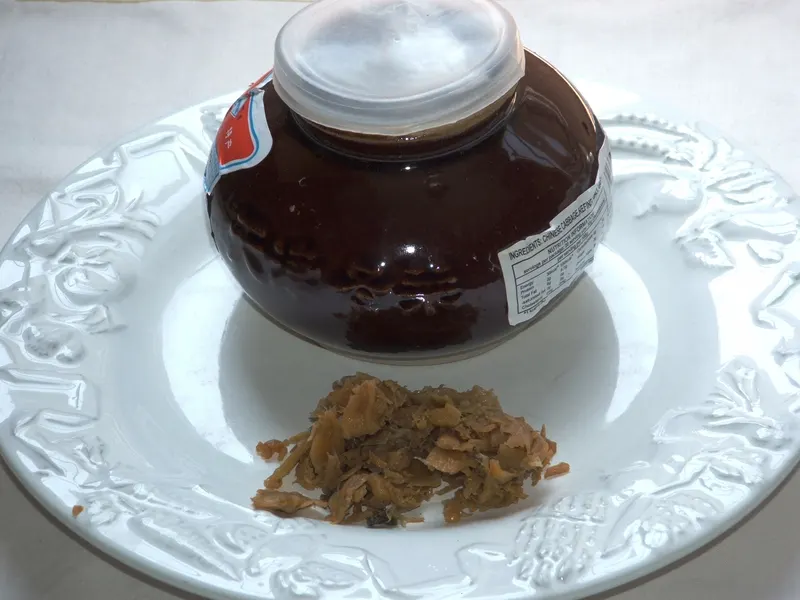
Tianjin dong cai (garlic preserved cabbage)天津冬菜
Napa cabbage is cut into small squares, dried in the open until just dry enough, then mixed with red-skinned garlic and roasted sea salt. The mix is sealed in crocks and left in a dark, airy place for five to eight months, where lactic bacteria ferment it into a salty, garlicky seasoning.
Total time across the recorded steps: 5 months – 8 months
Start
Drag the bar or press Play
What changes:The cabbage is cut by hand into small, nearly square pieces
Step 1 of 6
Cut the cabbage into small squares
Time
Not documented
Temperature
Not documented
Salt
None given
Acidity
Not documented
Which microbes the steps name, step by step
Lactic acid bacteria
Lactobacillus
Weissella
The traditional cut is 12 mm wide and 10 mm long, so the pieces come out near square. Machine cutting, salting and pressing spread from the late 1980s. Output: small cabbage squares.
Flavour
Not documented
Texture
Not documented
Colour
Not documented
Microbes at work in this step
Not documented for this step.
Method
Measured measured in a studySet fixed by a specification or tested recipeReported one source reports itTypical a general value, not sourced for this fermentUnconfirmed not yet checked against a source
At a glance
Napa cabbage is cut into small squares, dried in the open until just dry enough, then mixed with red-skinned garlic and roasted sea salt. The mix is sealed in crocks and left in a dark, airy place for five to eight months, where lactic bacteria ferment it into a salty, garlicky seasoning. Made in 6 steps over 5 months – 8 months. The longest step, leave to ferment in a dark, airy place, takes 5–8 months (网信天津 (Tianjin cyberspace office) 2021). Lactobacillus and Weissella does most of the fermenting.
Tianjin and Chaoshan-style dong cai are made from napa cabbage, while Sichuan dong cai is made from mustard. The Tianjin samples in one study had the most salt of the three regions.
Dong cai is a high-salt condiment. The Tianjin samples had the highest salt of the three regions studied. The same study did not detect Bacillus spp., Salmonella spp., Staphylococcus aureus or Shigella spp. in the three regional dong cai, though its conclusion lists Salmonella and Vibrio among the salt-tolerant bacteria it identified, so the paper is not consistent on Salmonella.
Chenguantun dong cai making is on Tianjin's municipal intangible heritage list. Jijiazhuang village, where it is said to have started, grows the most cabbage.