Side-by-side or overlay PDF diff driven by one engine that reads each file into a structured model — text, vector geometry, images, form fields, annotations — and compares the models. Moves show as moves, edits show only where they happened, and any PDF type works without picking a mode.
Open a STEP / STP part and it measures itself — volume, thinnest wall, draft and undercut checks on load, plus hole detection with a BOM. Measure, section, export STL. Rust + WASM B-rep kernel, runs in your browser.
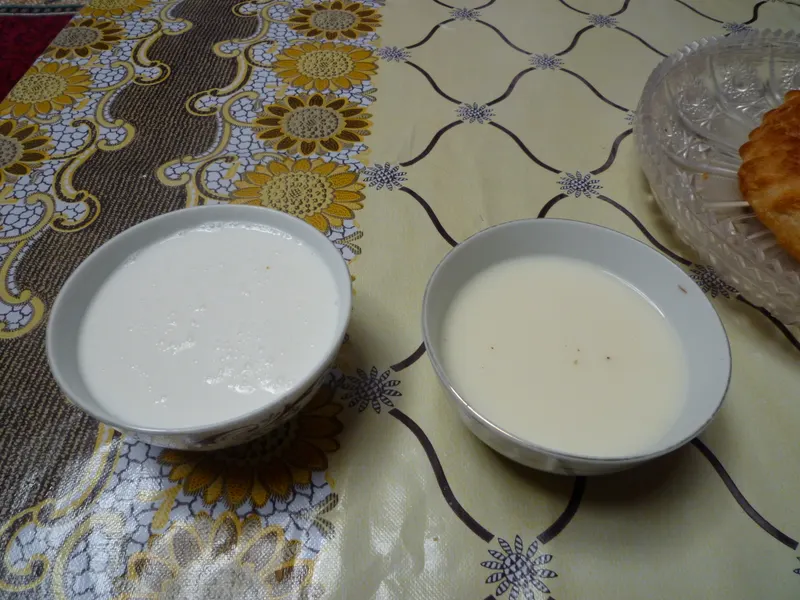
Chal is a sour, lightly fizzy camel-milk drink of the Turkmen. Camel milk is soured in a skin bag or jar with some older chal, and fresh milk is added each day for 3 to 4 days. The lactic bacteria and yeasts leave about 1.1 % alcohol and a little carbon dioxide.
No fixed amounts recordedA skin bag or ceramic jar of about 30 kg capacity (FAO, Yagil 1982). The end product should be 3 to 5 times the volume of the chal first put in. No other amounts are given.
The new milk is mixed with it, then fresh milk is added each day for 3–4 days[fao-yagil]
Starter
backslop, semi-continuous over 3–4 days; industrial: L. casei + S. thermophilus + lactose-fermenting yeasts (Torula spp. in older work)
Total time across the recorded steps: 4 days – 5 days
Start
Drag the bar or press Play
What changes:Camel milk sours with some older soured milk in a skin bag
Step 1 of 4
Sour camel milk with previously soured milk
Time
Not documented
Temperature
Not documented
Salt
None given
Acidity
Not documented
Which microbes the steps name, step by step
Lactobacilli
Yeasts
L. casei
Output: young chal.
Flavour
sour
Texture
thin
Colour
Not documented
Microbes at work in this step
lactobacilli, streptococci and yeasts from the old chal
Method
Measured measured in a studySet fixed by a specification or tested recipeReported one source reports itTypical a general value, not sourced for this fermentUnconfirmed not yet checked against a source
At a glance
Chal is a sour, lightly fizzy camel-milk drink of the Turkmen. Camel milk is soured in a skin bag or jar with some older chal, and fresh milk is added each day for 3 to 4 days. The lactic bacteria and yeasts leave about 1.1 % alcohol and a little carbon dioxide. Made in 4 steps over 4 days – 5 days. The longest step, add fresh milk daily for 3–4 days, takes 3–4 days (Yagil R. 1982). Lactobacilli, streptococci and yeast and Lacticaseibacillus casei, Streptococcus thermophilus and lactose-fermenting yeasts do most of the fermenting.
Chal is a continuous batch. Fresh camel milk is topped up every day for 3 to 4 days into the same skin bag, so the drink grows to 3 to 5 times the first volume. It is camel milk with yeast, so it carries some alcohol and gas, unlike a plain soured milk.
The traditional method adds fresh camel milk to the souring milk for 3 to 4 days, and the source describes no heating of that milk. The WHO says raw or undercooked animal products, including milk, carry a risk of infection from a variety of pathogens, and that people at greater risk of severe MERS should avoid drinking raw camel milk. For the industrial method, the FAO text says holder pasteurisation of the milk did not harm it, while 85 °C for 5 min gave a bad flavour.