Side-by-side or overlay PDF diff driven by one engine that reads each file into a structured model — text, vector geometry, images, form fields, annotations — and compares the models. Moves show as moves, edits show only where they happened, and any PDF type works without picking a mode.
Open a STEP / STP part and it measures itself — volume, thinnest wall, draft and undercut checks on load, plus hole detection with a BOM. Measure, section, export STL. Rust + WASM B-rep kernel, runs in your browser.
A mild, semi-soft cheese of whole cow milk, pasteurised (Trento also allows thermised), first made in the Val di Non in Trentino and named in 1955 by joining Fontina and Emmental. Mesophilic lactococci and rennet set the milk at 30–35 °C; the pressed wheels are brined and ripened one to two months in the cold, then usually coated with coloured wax.
No fixed amounts recordedDairy production; the regional sheets give temperatures and times but no amounts. Wheels weigh 8–12 kg (Lombardy) or 10–12 kg (Trento).
Whole cow milk, pasteurised (Lombardy) or thermised or pasteurised (Trento)
selected lactic cultures that include mesophilic lactococci
Total time across the recorded steps: 33 days – 2.1 months
Start
Drag the bar or press Play
What changes:The whole cow milk is pasteurised before cheesemaking; Trento also allows thermised milk
Step 1 of 6
Pasteurise the milk
Time
Not documented
Temperature
Not documented
Salt
None given
Acidity
Not documented
Commercial Fontal tested had residual alkaline phosphatase under 10 mU/g, which confirms pasteurised milk.
Flavour
Not documented
Texture
Not documented
Colour
Not documented
Microbes at work in this step
Not documented for this step.
Method
Measured measured in a studySet fixed by a specification or tested recipeReported one source reports itTypical a general value, not sourced for this fermentUnconfirmed not yet checked against a source
At a glance
A mild, semi-soft cheese of whole cow milk, pasteurised (Trento also allows thermised), first made in the Val di Non in Trentino and named in 1955 by joining Fontina and Emmental. Mesophilic lactococci and rennet set the milk at 30–35 °C; the pressed wheels are brined and ripened one to two months in the cold, then usually coated with coloured wax. Made in 6 steps over 33 days – 2.1 months. The longest step, ripen cold, takes 30 days – 2 months (Regione Lombardia 2008) and runs at 4–10 °C (Regione Lombardia 2008). Selected lactic starter culture that includes mesophilic lactococci does most of the fermenting.
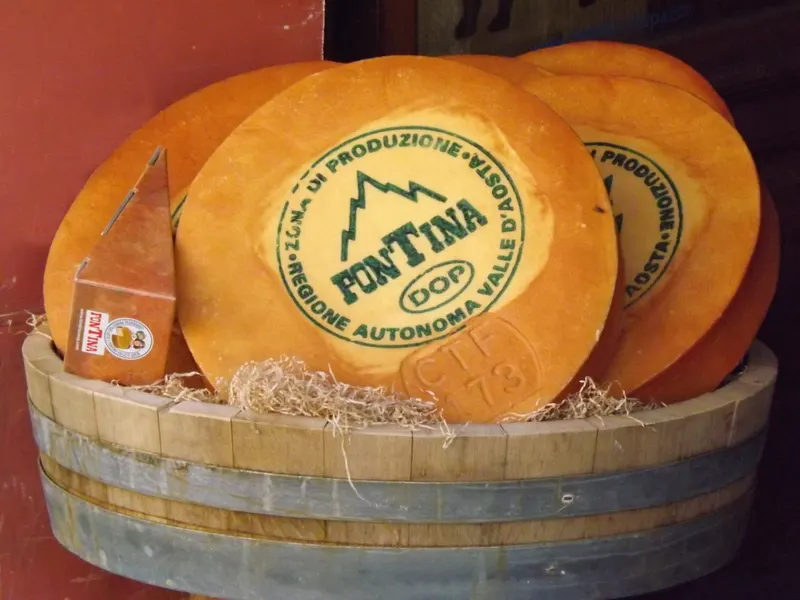
A cousin of Fontina made from pasteurised milk (or thermised, in Trento) with a selected culture, ripened one to two months. In a study of commercial cheeses, Fontal had a coated rind with no smear and a lower pH than raw-milk Fontina; two cheeses sold as traditional Fontal had a thin smear and a Fontina-like pH.
Name
Coined in 1955 from the names Fontina and Emmental
Acidity
pH 5.62–5.90 in commercial Fontal, against 6.01–6.46 in Fontina PDO
Size
Wheels 30–40 cm across with an 8–10 cm heel, weighing 8–12 kg
The milk is pasteurised in Lombardy and thermised or pasteurised in Trento, and thermised milk is not pasteurised milk. The cheese ripens cold, at 4–10 °C in the regional sheets.
Both regional sheets say Fontal began in the Val di Non in the 1960s–70s at a butter-making company, where a partner had introduced a Danish-type cheese whose whey was used to melt the butter blocks. After some years Fontal replaced it. Around the 1970s the large Trentino cooperative dairies took it up. The Lombardy sheet says it is now made industrially across Lombardy.