Side-by-side or overlay PDF diff driven by one engine that reads each file into a structured model — text, vector geometry, images, form fields, annotations — and compares the models. Moves show as moves, edits show only where they happened, and any PDF type works without picking a mode.
Open a STEP / STP part and it measures itself — volume, thinnest wall, draft and undercut checks on load, plus hole detection with a BOM. Measure, section, export STL. Rust + WASM B-rep kernel, runs in your browser.
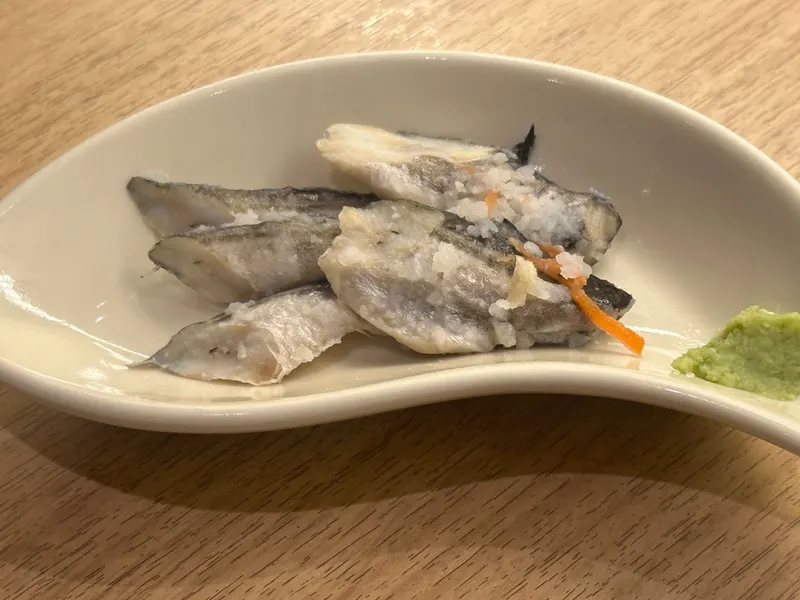
Hatahata-zushi is Akita's izushi of sailfin sandfish. The gutted fish is soaked for days in cold water to draw out the blood, pickled a day in vinegar and salt, then layered in a tub with cooked rice, koji, carrot, seaweed and bamboo leaves under a heavy weight. It ripens in a cool place for about three weeks.
Fully documentedFish and seafood17 days – 2.2 months
Amounts from a sourceOne tub for festive use, from the MAFF regional-dish recipe supplied by the Akita rural women's life-improvement study groups ('Akita kyōmi fudoki'). Recipes differ by area and household.
Total time across the recorded steps: 17 days – 2.2 months
Start
Drag the bar or press Play
What changes:The sandfish are trimmed and washed in cold water with salt to remove the slime
Step 1 of 7
Trim the fish and wash off the slime
Time
Not documented
Temperature
Not documented
Salt
None given
Acidity
Not documented
Which microbes the steps name, step by step
Moulds
Lactic acid bacteria
Head, guts and tail are removed; the fish is washed in cold water, rubbed with salt to take off the slime.
Flavour
Not documented
Texture
Not documented
Colour
Not documented
Microbes at work in this step
Not documented for this step.
Method
Measured measured in a studySet fixed by a specification or tested recipeReported one source reports itTypical a general value, not sourced for this fermentUnconfirmed not yet checked against a source
At a glance
Hatahata-zushi is Akita's izushi of sailfin sandfish. The gutted fish is soaked for days in cold water to draw out the blood, pickled a day in vinegar and salt, then layered in a tub with cooked rice, koji, carrot, seaweed and bamboo leaves under a heavy weight. It ripens in a cool place for about three weeks. Made in 7 steps over 17 days – 2.2 months. The longest step, ripen in a cool place, takes 10 days – 2 months (MAFF Japan) and runs at 5–10 °C (Yamada J. and Tsukamoto K). Lactic acid bacteria does most of the fermenting.
Hatahata-zushi is a koji izushi, not a long narezushi. The fish is soaked and vinegar-pickled first and ripens for weeks with koji rice in the cold, unlike funazushi, which is salted for months and fermented in plain rice for half a year or more.
Salt-first hatahata-zushiThe older method salts the fish straight away; the soaking method draws out the slime and blood first for a cleaner taste.
Kiri-zushi and ippiki-zushiCut pieces or whole fish.
Maru-zushi (全ずし)Only the head is removed and the fish is pickled whole; Wikipedia says this is the kind usually sold in shops, while ippiki-zushi is the most formal and served at celebrations.
Safety
Izushi is Japan's leading food cause of botulism, which can kill, and Japan's farm ministry (MAFF) lists a December 1984 poisoning of six people, none fatal, from izushi of hatahata and salmon. MAFF says the spores do not grow at pH 4.6 or lower, water activity 0.94 or lower, or 3.3 °C or colder. Akita makers ripen mainly at 5–10 °C, which is warmer than that, and four commercial products measured pH 4.4–4.9, so not all were under the limit. The finished izushi is kept in the refrigerator. Tests on those four products found no Clostridium, E. coli, Staphylococcus aureus, Vibrio or Salmonella, which does not show that any other batch is safe. Heating right before eating, at 80 °C for 20 minutes or 100 °C for 1–2 minutes, destroys the toxin (MAFF). Treat the recipe here as a record of a regional dish, not a tested safe method.
Hazards the sources name: Clostridium botulinum (izushi of hatahata and salmon, 6 patients and no deaths in December 1984, in MAFF's case table); Clostridium, E. coli, Staphylococcus aureus, Vibrio and Salmonella were tested for and not found in any of four commercial products.
In the Edo period hatahata was a cheap fish that nobles did not favour but ordinary people liked, and in the early Showa years even inland mountain areas of eastern Akita made izushi from boxes of salted hatahata at the year end (Japanese Wikipedia, citing Hibino 1999). The name comes from an old word for thunder, as the fish come inshore in a large school to spawn when the sea is stormy. Akita's catch once passed 10,000 tonnes a year; after it fell, hatahata became an expensive fish. Of the izushi made in Akita, 93 % was hatahata in a prefectural survey.