Side-by-side or overlay PDF diff driven by one engine that reads each file into a structured model — text, vector geometry, images, form fields, annotations — and compares the models. Moves show as moves, edits show only where they happened, and any PDF type works without picking a mode.
Open a STEP / STP part and it measures itself — volume, thinnest wall, draft and undercut checks on load, plus hole detection with a BOM. Measure, section, export STL. Rust + WASM B-rep kernel, runs in your browser.
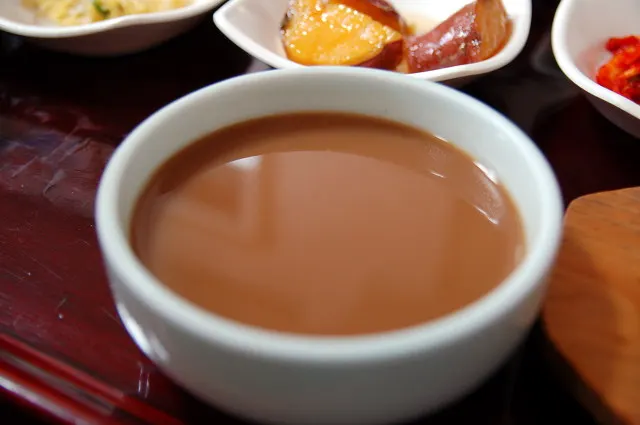
Moju is a sweet, spiced drink from Jeonju, drunk as a hangover cure. Makgeolli (or the lees left after straining rice wine) is stirred and heated with medicinal herbs and brown sugar, then strained, so most of the alcohol is driven off. Moju sold in Jeonju restaurants averaged about 1 % alcohol and pH 4.25.
No fixed amounts recordedRestaurant recipes with no published amounts. A 2011 study measured 22 moju sold in Jeonju restaurants; its abstract gives no recipe amounts.
Makgeolli (takju)
Older practice used the lees left after straining rice wine, washed with water and strained cloudy[lee2011][KOWP:모주]
Ginseng, arrowroot (chik), licorice, cinnamon, jujube and ginger
Total time across the recorded steps: 30 min – 40 min
Start
Drag the bar or press Play
What changes:Makgeolli, or rice-wine lees washed with water, goes into the pot
Step 1 of 4
Start from makgeolli, or from wine lees washed with water
Time
Not documented
Temperature
Not documented
Salt
None given
Acidity
Not documented
Output: cloudy rice-wine base.
Flavour
Not documented
Texture
Not documented
Colour
Not documented
Microbes at work in this step
Not documented for this step.
Method
Measured measured in a studySet fixed by a specification or tested recipeReported one source reports itTypical a general value, not sourced for this fermentUnconfirmed not yet checked against a source
At a glance
Moju is a sweet, spiced drink from Jeonju, drunk as a hangover cure. Makgeolli (or the lees left after straining rice wine) is stirred and heated with medicinal herbs and brown sugar, then strained, so most of the alcohol is driven off. Moju sold in Jeonju restaurants averaged about 1 % alcohol and pH 4.25. Made in 4 steps over 30 min – 40 min. The longest step, heat and stir until reduced and most alcohol is gone, takes 30–40 min (Jeonju Jujo Co. (전주주조)).
Moju starts from finished makgeolli but is cooked with herbs and brown sugar, so most of the alcohol is driven off. Makgeolli itself is drunk unheated.
By tradition the name comes from Lady No, mother of Queen Inmok. The Daedong yaseung says she was exiled to Jeju under King Gwanghaegun and sold cheap makgeolli made by brewing the lees a second time, so it was first called daebi moju (queen mother's moju). In late Joseon Seoul, moju shops sold lees stirred with water and boiled hot, with very little alcohol, to day labourers on winter mornings. The Encyclopedia of Korean Culture gives this lees-and-water version; the Jeonju herbal version on this page is described only by the 2011 study and Korean Wikipedia.
Starter
The sources we found do not say how its fermentation begins.