Side-by-side or overlay PDF diff driven by one engine that reads each file into a structured model — text, vector geometry, images, form fields, annotations — and compares the models. Moves show as moves, edits show only where they happened, and any PDF type works without picking a mode.
Open a STEP / STP part and it measures itself — volume, thinnest wall, draft and undercut checks on load, plus hole detection with a BOM. Measure, section, export STL. Rust + WASM B-rep kernel, runs in your browser.
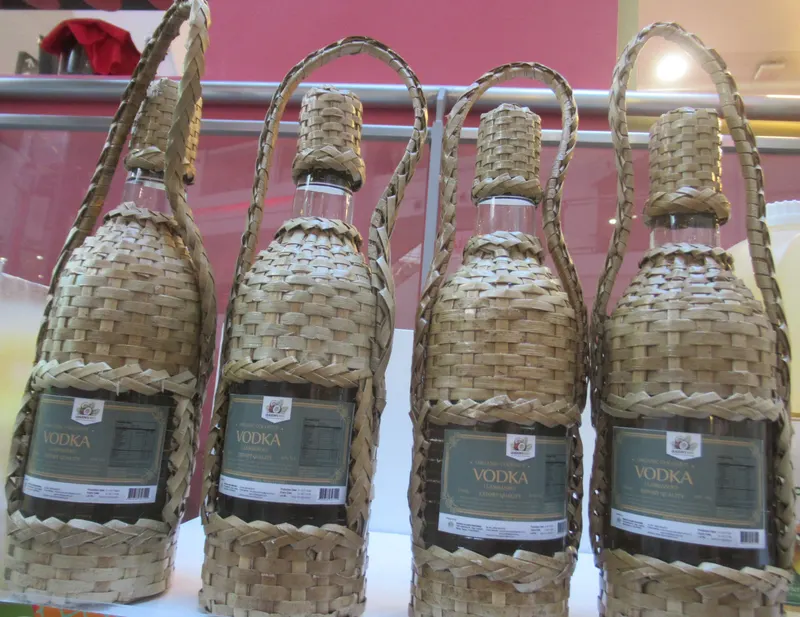
Lambanog is a clear Philippine spirit distilled from coconut toddy, which is coconut sap left to ferment on its own. The fermentation is the atlas part; the distilling that follows is a boundary step. Methanol contamination of lambanog is the main cause of lambanog-related deaths.
No fixed amounts recordedTraditional process with no fixed batch size in the sources. The recipe is only coconut sap fermented on its own, then distilled.
Coconut sap
From the cut, unopened flower stalk; left to ferment into pearly white toddy[fernandez1979]
Starter
spontaneous
Total time across the recorded steps: 3 days
Start
Drag the bar or press Play
What changes:Sap drips from the cut, unopened coconut flower stalk
Step 1 of 3
Tap the coconut flower stalk
Time
Not documented
Temperature
Not documented
Salt
None given
Acidity
Not documented
Which microbes the steps name, step by step
Saccharomyces cerevisiae
Yeasts
Pichia kudriavzevii
Output: fresh coconut sap.
Flavour
Not documented
Texture
Not documented
Colour
Not documented
Microbes at work in this step
Not documented for this step.
Method
Measured measured in a studySet fixed by a specification or tested recipeReported one source reports itTypical a general value, not sourced for this fermentUnconfirmed not yet checked against a source
At a glance
Lambanog is a clear Philippine spirit distilled from coconut toddy, which is coconut sap left to ferment on its own. The fermentation is the atlas part; the distilling that follows is a boundary step. Methanol contamination of lambanog is the main cause of lambanog-related deaths. Made in 3 steps over 3 days. The longest step, let the sap ferment, takes 3 days (Velasco R.M. 2013). Saccharomyces cerevisiae, the dominant yeast in naturally fermenting nipa palm sap at Mauban, Quezon, a lambanog-making site; Pichia kudriavzevii was also isolated does most of the fermenting.
Lambanog starts as the same kind of sap as tubâ, but its toddy is pearly white, where tanbark makes tubâ reddish to orange, and it is distilled rather than drunk. Its toddy has less alcohol (4.25 to 6.6 %) and a lower pH (3.6 to 4) than fresh tubâ (5.77 to 9.26 %, pH 4.35 to 5).
Nipa-sap lambanogMade from fermenting nipa palm sap at sites such as Mauban, Quezon, where Saccharomyces cerevisiae is the dominant yeast.
Safety
Methanol contamination is the major cause of lambanog-related deaths in the Philippines, so strict testing of methanol and ethanol is advised. Methanol can blind and kill. Symptoms usually start within 12–24 hours of drinking, but can come much later when ethanol is drunk with it, as in any spirit, so feeling well after a day does not rule it out. Setting aside the first drops does not make a spirit safe. A review of fruit spirits in general says that in a pot still methanol stays at almost the same level through most of the run and builds up at the end, not in the first drops. In a lab trial with fermented coconut water, not coconut sap, methanol in every distillation stage, head fraction included, stayed within the legal limit, and removing the head fraction lowered the ethanol and ethyl acetate of the distillate. That one trial does not clear any other batch. Only a lab test shows what a given spirit holds.
A 1926 account by E. M. Gross quotes a Spanish-era document of 1571 that reports brandy made from palm wine, from the coconut palm and from the wild nipa palm. Gross writes that distillation seems to have been taught to the natives by the Chinese, with pot stills. He gives 1862 as the year the alcohol monopoly ended, and about 68 recognised distilleries in 1910, alongside many illicit stills.