Side-by-side or overlay PDF diff driven by one engine that reads each file into a structured model — text, vector geometry, images, form fields, annotations — and compares the models. Moves show as moves, edits show only where they happened, and any PDF type works without picking a mode.
Open a STEP / STP part and it measures itself — volume, thinnest wall, draft and undercut checks on load, plus hole detection with a BOM. Measure, section, export STL. Rust + WASM B-rep kernel, runs in your browser.
Alcoholic drinks from Douro Demarcated Region, Portugal
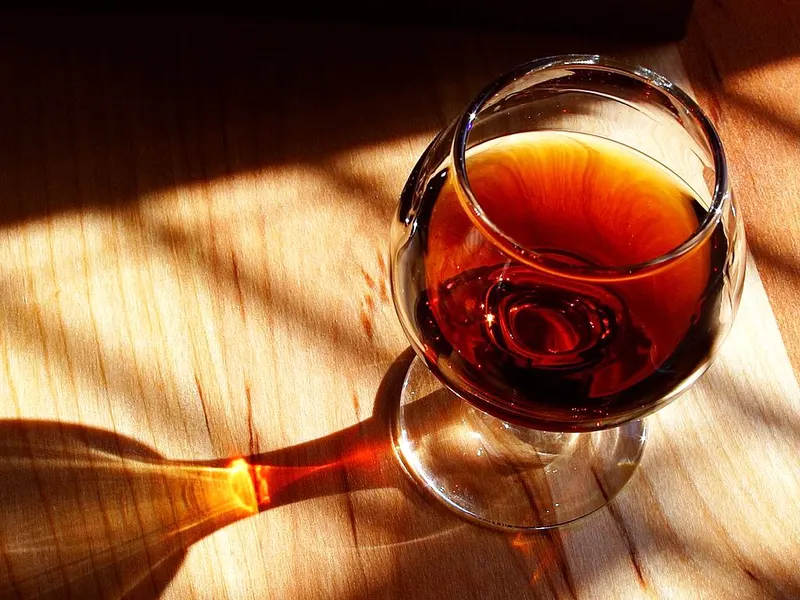
Port (Porto)vinho do Porto
Port is a fortified wine from the Douro valley in Portugal. The grapes ferment on their skins for about two days, then grape spirit of about 77 % is added, which stops the yeast and leaves the wine sweet. The finished wine holds 19–22 % alcohol and is aged in wood, tank or bottle.
Fully documentedAlcoholic drinks2 days – 3 daysPDO Porto (PDO-PT-A1540)Family: Red wine
Recipe
Photo: Jon Sullivan, Public domain, via Wikimedia Commons
Amounts from a sourceThe IVDP harvest rules allow 65 to 120 L of certified wine spirit for every 550 L of Port made; the rest of the 550 L is fermenting must.
Fermenting grape must from the Douro
The must's natural potential alcohol must average at least 11 % vol[ivdp-spec]
Total time across the recorded steps: 2 days – 3 days
Start
Drag the bar or press Play
What changes:Ripe grapes are picked on the Douro terraces
Step 1 of 5
Harvest grapes in the Douro Demarcated Region
Time
Not documented
Temperature
Not documented
Salt
None given
Acidity
Not documented
Which microbes the steps name, step by step
Yeasts
Saccharomyces
Hanseniaspora uvarum
Saccharomyces cerevisiae
Output: ripe grapes.
Flavour
Not documented
Texture
Not documented
Colour
Not documented
Microbes at work in this step
Not documented for this step.
Method
Measured measured in a studySet fixed by a specification or tested recipeReported one source reports itTypical a general value, not sourced for this fermentUnconfirmed not yet checked against a source
At a glance
Port is a fortified wine from the Douro valley in Portugal. The grapes ferment on their skins for about two days, then grape spirit of about 77 % is added, which stops the yeast and leaves the wine sweet. The finished wine holds 19–22 % alcohol and is aged in wood, tank or bottle. Made in 5 steps over 2 days – 3 days. The longest step, ferment on the skins until about half the sugar is gone, takes 2–3 days (Warre's 2026) and runs at 17–18 °C (Ribeiro S.G 2023). Native non-Saccharomyces yeasts of spontaneously fermenting Port must, mainly Hanseniaspora uvarum and Saccharomyces cerevisiae, which in wine fermentation in general gradually replaces the non-Saccharomyces yeasts as the ethanol rises do most of the fermenting.
Unlike table wine, Port's fermentation is cut short by adding strong grape spirit, so about half the grape sugar stays in the wine. The spirit itself is regulated, at 77 % vol and between 65 and 120 L for every 550 L of wine.
Tawny and colheitaLong oxidative ageing in wood; a colheita comes from one harvest year.
Vintage, LBV and crustedVintage and LBV come from a single harvest; crusted is a blend of years that forms a deposit in the bottle.
White and rosé PortMade from white grapes, or with a short skin contact for rosé.
Safety
The wine spirit used must meet IVDP limits, including methanol at no more than 100 mg per 100 cm³ of pure alcohol. Red Port may hold at most 150 mg/L of sulphur dioxide and white Port 160 mg/L.
In 1678 two representatives of a Liverpool wine merchant visited the Abbot of Lamego, bought his fortified wine and shipped it to England. Port became very popular in England after the Methuen Treaty of 1703 let merchants import it at a low duty. In 1756 the Companhia Geral da Agricultura das Vinhas do Alto Douro was founded to guarantee the quality of the wine and a fair price.